
Nth Cycle, a three-time Global Cleantech 100 award winner, announced on July 22, 2026 that it will go public through a merger with Kensington Capital Acquisition Corp. VI (NYSE: KCAC). Founded in 2017 and based in the Boston area, Nth Cycle operates a refining platform for rare earth elements, copper, and battery materials, sourced from both mined ore and recycled feedstock (end-of-life batteries, electronics, and industrial scrap). Its flagship technology is “the Oyster,” a modular electro-extraction system designed to replace traditional, polluting refineries by co-locating directly with battery recyclers and miners rather than requiring large centralized refining infrastructure. The company describes itself as operating the first U.S. refinery producing a high-purity nickel-cobalt mixed hydroxide product from recycled battery feedstock.
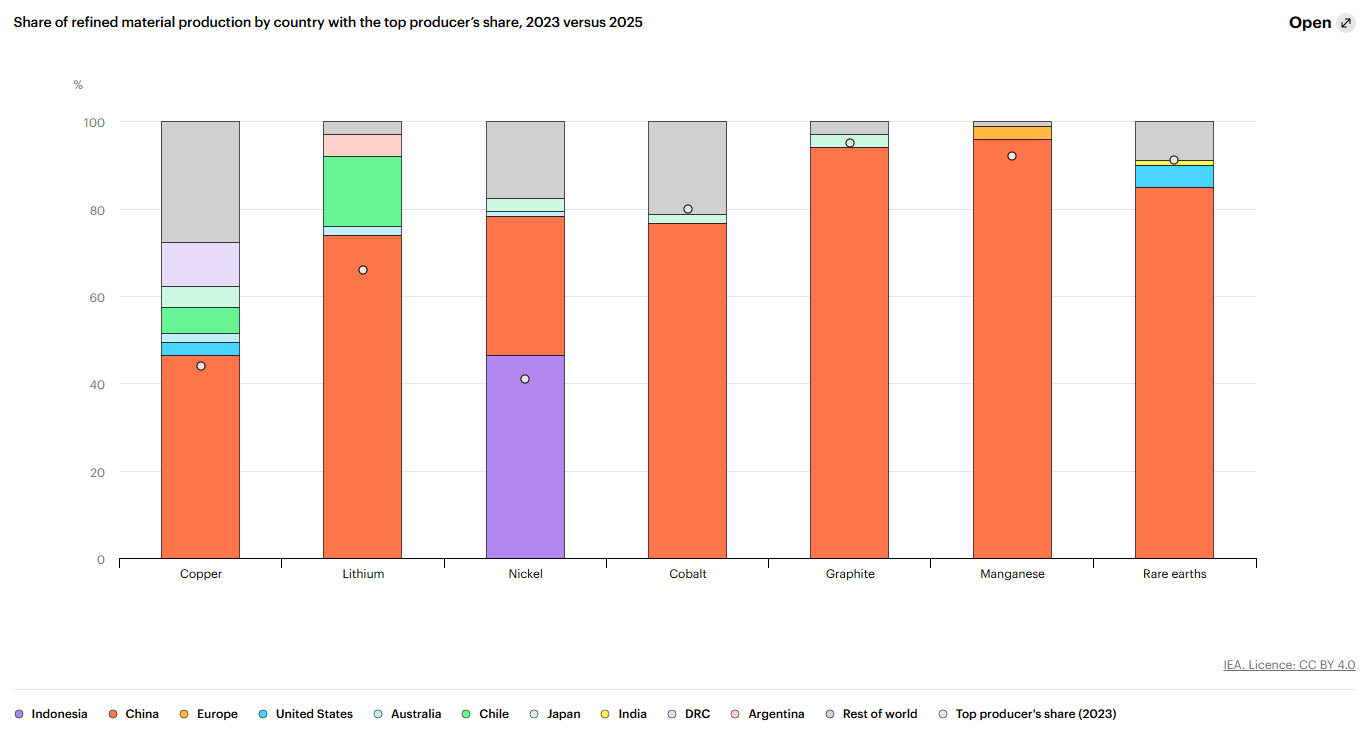
Nth Cycle’s public listing lands squarely inside the structural story we have been tracking all year: processing capacity, not raw ore, is the actual bottleneck in Western battery, defense, and clean energy supply chains. China controls an estimated 60% to 85% of global rare earth and critical mineral refining capacity, built over decades through deliberate industrial policy and subsidized processing infrastructure. Estimates vary by source and mineral, but the 2026 IEA Critical Minerals Outlook puts China’s dominance at the higher end of that range. Mining alone does not solve Western supply security: minerals have little commercial value until refined (as shared in a previous briefing).
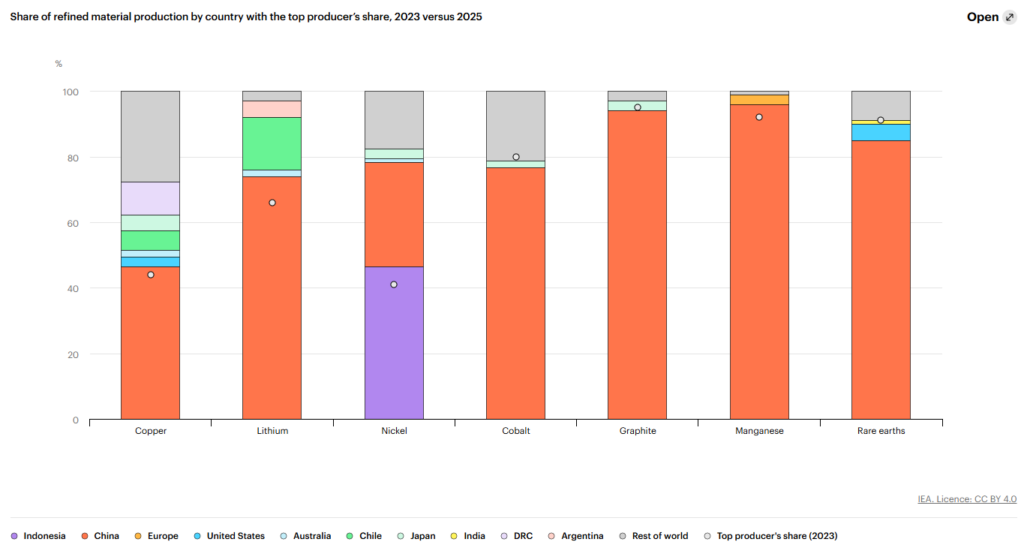
Source: IEA Global Critical Minerals Outlook
The merger implies an enterprise value of approximately $585M for the combined entity, which will be renamed Nth Cycle Holdings and expects to trade on the NYSE under the ticker “NTH.” Both companies’ boards have approved the deal, which is targeted to close in the fourth quarter of 2026, pending shareholder and regulatory approval. Commercially, the headline data point is a 10-year offtake term sheet with commodities trader Trafigura, valued at approximately $1.1B. It is worth flagging that this is a letter of intent (LOI), not a signed, binding contract; converting it to a definitive agreement will require further steps from both sides. LOIs of this kind do not always convert on the terms originally floated.
The Full Picture Is Members-Only
Members get the complete analysis. Unlock the full picture—the insights, data, and connections that will guide your next move.