

Europe is in its second major heatwave in two months, with record June temperatures across the UK, France, and Spain and red alerts in place from London to Vienna. The human toll is already visible in surging ER visits and cardiac arrests. The less visible story is structural. Europe is the fastest-warming continent, and its building stock, transport, and grids were designed for a climate that no longer exists. Only around 20% of European homes have air conditioning, trains are slowing because steel tracks buckle, and the continent now faces a new baseline, not an outlier.
The energy system is where that exposure bites hardest, and it is the part most people miss. This week, UK gas plants cut output because they could not cool, French power failed after a heat-related transformer fault, and German evening prices spiked more than threefold as solar faded and cooling demand surged. The French grid operator put it plainly: in a heatwave, every additional degree of warming adds 1 GW of consumption, almost all of it cooling.
The Cooling Doom Loop
The instinct is to reach for more air conditioning. Global cooling demand could more than triple by 2050 on current trends, and residential AC units have already tripled since 2000 to more than 1.5 billion. More AC raises peak demand, vents exhaust heat that deepens the urban heat island effect, and pushes grids to the edge precisely when they can least cope. Battery storage helps by carrying daytime solar into the evening cooling peak, but it is an enabling layer and does nothing about a building that was never built for this climate.
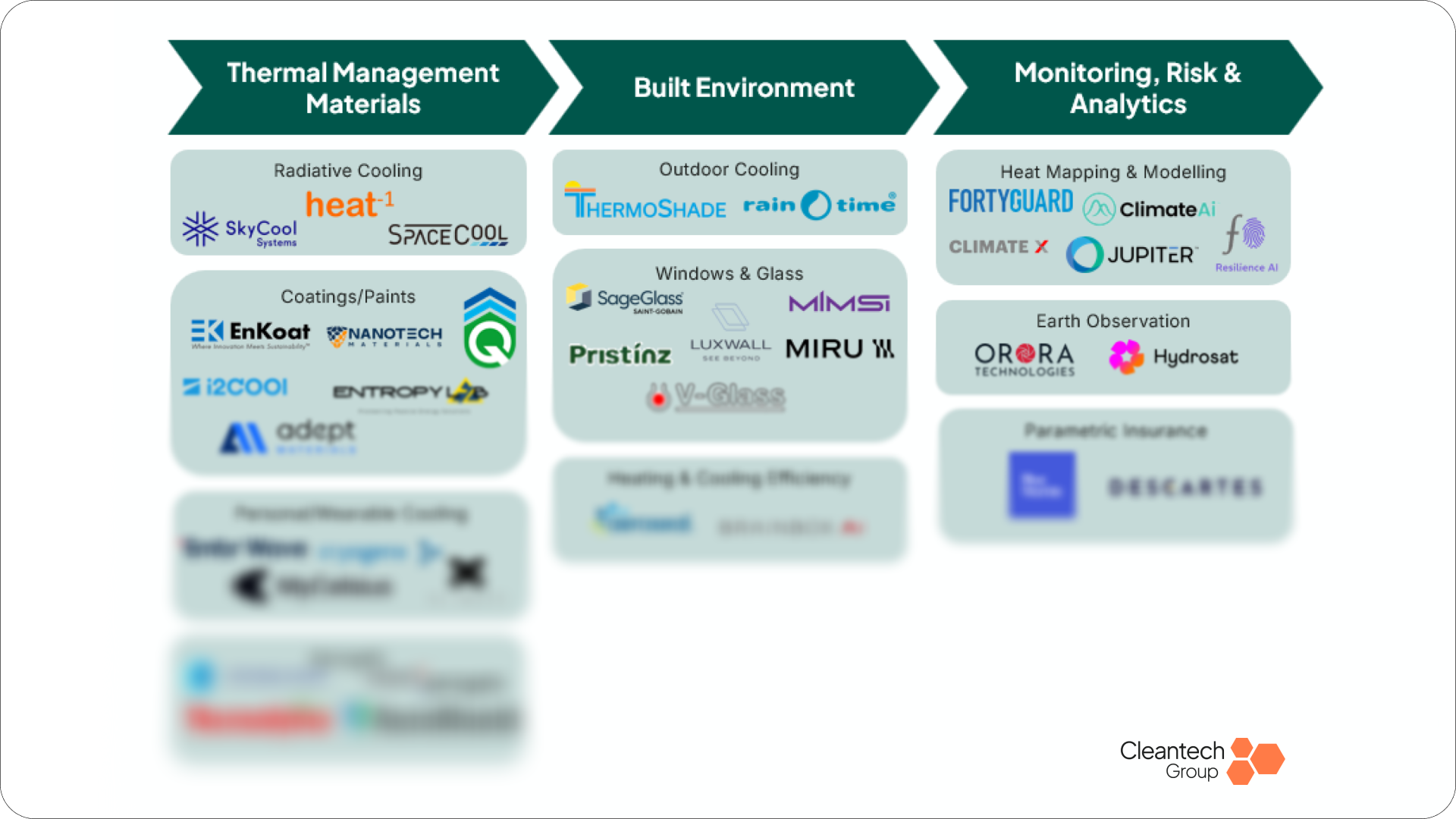
A more durable response treats heat resilience as a stack with two interdependent layers. The passive layer reduces heat at the point of impact without consuming energy: radiative cooling surfaces, aerogel insulation, phase-change materials, and reflective and low-emissivity coatings. The active layer monitors, responds, and verifies: building energy management systems, heat risk analytics, and AI-driven HVAC control. Materials that cannot prove aged performance will not get financed, and analytics that flag risk without enabling a physical response leave the loop open.

The Full Picture Is Members-Only
Members get the complete analysis. Unlock the full picture—the insights, data, and connections that will guide your next move.