
Rainmaker closed a $100M Series B on September 21, backed by NOA VC, Upfront Ventures, DCVC, Lowercarbon Capital, and Dream Ventures. The cloud seeding start-up reports 145 million gallons of verified precipitation and expects its water to undercut most alternative sources, including desalination, by this winter. Its ambitions go further: hail, heat, and soil are next, and it wants to become America’s “Weather Prime,” a private counterpart to China’s state weather program.
The round is a strong signal for one application, but a weak one for the category. Rainmaker’s 145 million gallons, enough for about 1,800 households, show that seeded precipitation can finally be measured, something the industry has lacked for decades. Whether seeding can supply a river basin remains unproven, and the figures are Rainmaker’s own.
The terraforming pitch is harder to dismiss than it sounds. Cloud seeding has a clear agricultural case, and within a few decades keeping arable land arable may become a baseline need. The weak point is who delivers it. Weather modification at national scale is a state function, run by public agencies that answer for downwind effects. A start-up can sell a measured service into that system, but it cannot become the system.
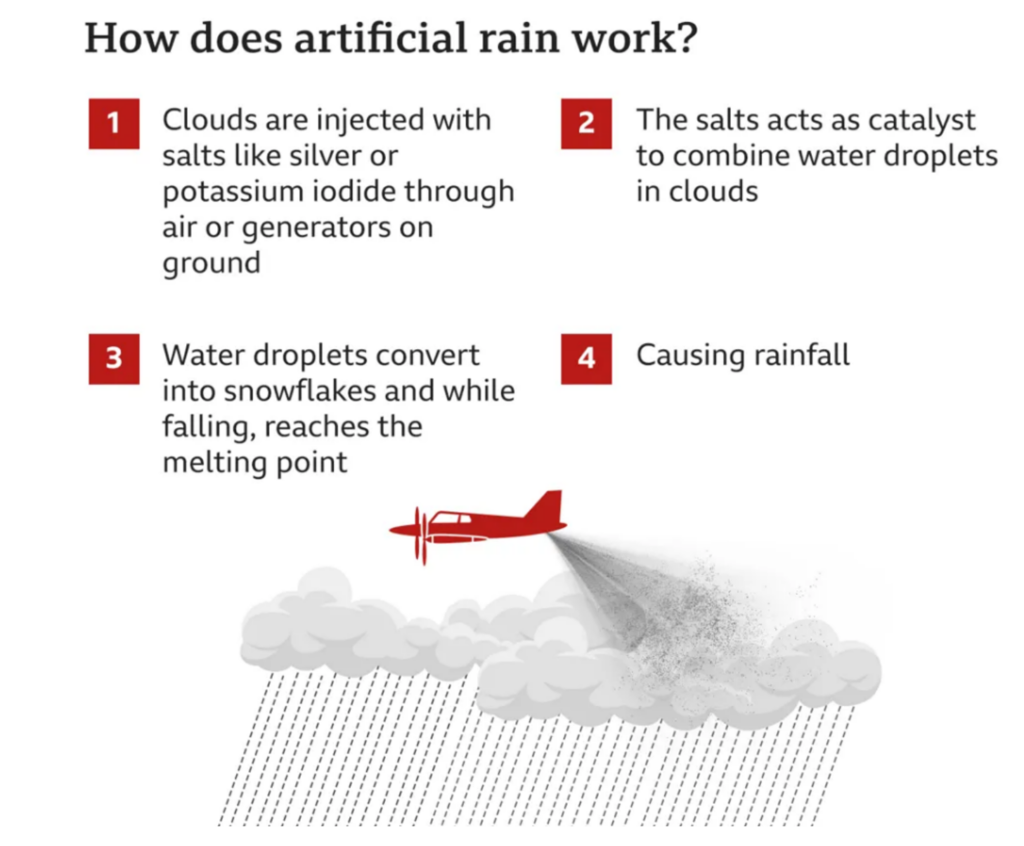
What Works, and Where
Demand is building regardless of the technology. Changing drought patterns are making it harder for water utilities to maintain aquifer levels and plan water inventory over the long term. Regions predisposed to drought are likely to see it worsen, and regions previously unexposed lack toolkits to prevent it.
Cloud seeding is the most operationally established response, with national programs in China and the United Arab Emirates (UAE), and state and utility programs across the western U.S. Its weakness has always been efficacy, because operators struggled to separate seeded precipitation from what would have fallen anyway. Rainmaker’s drones fly programmed patterns and its radar measures the outcome, and in April the company announced validated results from Oregon and Utah.
The Setting Matters as Much as the Technology
Rainmaker’s validated results come from a specific setting with four features:
- The effect is local and measurable within a single storm.
- The water lands in snowpack that feeds existing reservoirs and allocation systems.
- The buyer is a water authority or a corporate buyer with a defined water target.
- State licensing and federal reporting to the National Oceanic and Atmospheric Administration already govern seeding.
Rainmaker now operates in five Western states and has signed an unnamed data center provider, an early sign of corporate water-stewardship buyers. Outside those conditions the evidence thins quickly. Hail, heat, and soil, the company’s stated next targets, have no comparable validated record, and newly drought-exposed regions will need to confirm their storms suit seeding before buying it.
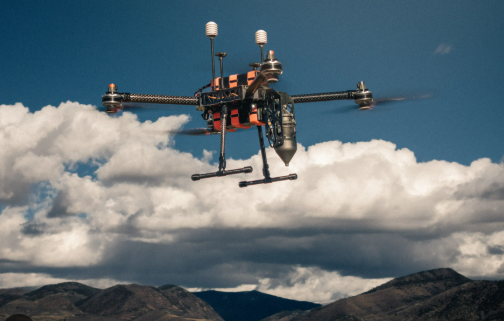
Source: Rainmaker
What It Would Take to Scale
Three conditions would need to hold before cloud seeding becomes water infrastructure:
- Independent verification. Yields measured by an operator’s own radar need agency or third-party replication before water managers can book seeded acre-feet as supply.
- Clear liability and allocation rules. These must cover who owns seeded water and who answers when precipitation shifts downwind.
- Bounded scope. Contracts need to be tied to a defined basin, season, and outcome. The further a company reaches beyond those bounds, the faster a water service starts to resemble the open-ended weather control that legislatures are moving to ban.
Solar Geoengineering Is Stuck on the Same Gap
Solar Radiation Modification (SRM) shows the inverse. Make Sunsets remains the only company publicly selling stratospheric aerosol deployments, releasing sulfur dioxide from weather balloons and selling $10 cooling credits with no scientific mechanism to verify them. Revenue remains small, and the company has drawn an information demand from the U.S. Environmental Protection Agency. Stardust Solutions took the opposite route: roughly $75M raised, published safety principles, and a stated deference to government deployment decisions. It planned contained outdoor tests from April 2026, but its work remains in the lab. SRM fails every condition above, since its effects are global, unattributable to any single deployment, and unbounded. Governance remains the binding constraint.
Incumbents Are Buying the Forecasting Layer
Companies using forecasting to target and validate interventions could build revenue before the broader market matures. The Atmo and Rainmaker alliance was the clearest example, pairing Atmo’s AI cloud selection with Rainmaker’s radar measurement. In June, Vaisala agreed to acquire Atmo for $70M plus up to $60M in earn-outs, and the companies expect the deal to close by year-end. Neither company has addressed the alliance’s future, but the direction is telling: incumbents are absorbing forecasting, while intervention, where the verification burden and regulatory risk sit, stays with independent start-ups.
Wildfire prevention is where this model could find its next marketable service. Weather modification is no firefighting tool, but as an upstream measure it can complement controlled burns and, in some landscapes, reduce how often they are needed. Skyward Wildfire applies the approach to lightning. It raised $5.7M in early 2026 after walking back a website claim that it could prevent up to 100% of strikes, and in May it secured up to $1M from British Columbia (B.C.) for a contracted field trial against provincial wildfire standards.
What to Watch
- Independent replication. Watch whether a water agency or independent research group replicates Rainmaker’s yields. Until that happens, seeded acre-feet remain a vendor claim that water managers cannot book as supply.
- Rainmaker’s cost curve. Watch whether its projected cost per acre-foot holds through the 2026-27 season. This is the first real test of whether cloud seeding can compete with desalination and fallowing on price.
- Vaisala’s intentions for Atmo. Watch whether Vaisala keeps Atmo’s intervention partnerships after the deal closes, or pulls the forecasting layer back toward pure weather intelligence.
- Skyward’s field trial. Watch whether the B.C. trial produces independently verifiable results, which would be the first government-assessed test of lightning suppression against operational wildfire standards.
- Stardust’s outdoor testing. Watch whether Stardust moves its tests outdoors, and under what government oversight. That decision will shape how regulators treat every SRM company that follows.
- State legislation. Verification may not protect the category from politics. Tennessee, Florida, and Louisiana have banned geoengineering, and Florida’s 2025 law bans cloud seeding outright. A backlash driven by SRM fears is already closing markets to operators regardless of how rigorously they measure precipitation.
Join Our Community
Stay informed of our latest market insights with our newsletters and receive invitations to a regular stream of events and webinars, online and in-person.