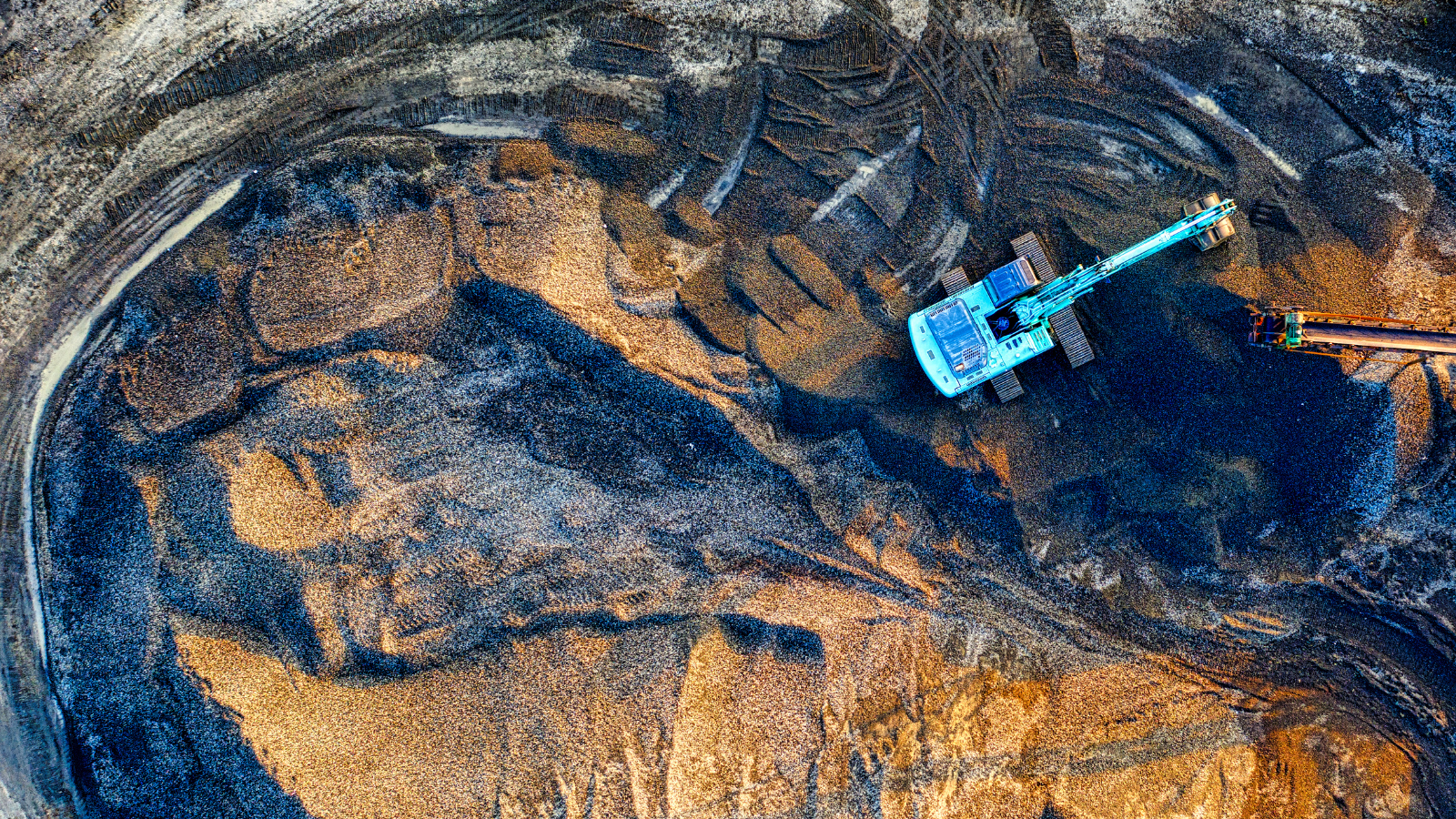
AI is rapidly reshaping mineral exploration and mining, but not in the way many initially expected. The competitive advantage in this sector is not simply about building better algorithms. Instead, it hinges on who controls the most valuable data, who can deploy technology in the harshest environments, and who can translate digital insights into physical asset ownership. At the same time, geopolitical pressures and supply chain vulnerabilities are elevating mineral discovery from a commercial priority to a national security imperative.
- The defensible moat isn’t always a better model; it’s hard-to-replicate data access, sensing infrastructure, and deployment capability.
Mining datasets are fragmented and inconsistent, so the winners will be the companies that control proprietary data pipelines (e.g., hyperspectral scans and downhole measurements) and can integrate them into end-to-end workflows that work in real mine conditions. KoBold Metal’s advantage, for example, has been tied to early access to Rio Tinto exploration data, while GeologicAI is differentiating through high-resolution sensing that generates materially better inputs, combined with better analytics (see their recent acquisition of Lumo Analytics). And even when the AI works, getting it into the field is often a connectivity problem. Innovators like Qiyuan Core Power show that in remote environments, deployment can require vertical integration into digital infrastructure such as 5G to make AI usable at scale.
- AI in mining is increasingly being pulled into a national security and defense-adjacent agenda (see U.S. Executive Orders, the EU Critical Raw Materials Act, and IRA-style incentives), not just a productivity story.
As governments and allied industries push to reduce reliance on concentrated mineral supply chains, domestic discovery and development of critical materials is becoming a strategic priority, driving public financing, policy support, and faster experimentation with technologies that can expand the discoverable resource base. That shift is one reason we can expect a spike in corporate pilots and partnerships: AI-enabled exploration is going further than just operational efficiency; it’s about securing the upstream inputs that underpin industrial resilience and defense supply chains.
- Shifting from “software” to “ownership.”
The most differentiated AI exploration players aren’t building SaaS businesses, they’re using AI to generate mineral assets and capture discovery upside. VerAI Discoveries is a clear example: it uses AI to identify targets, then stakes and holds mineral rights and builds a portfolio of assets rather than monetizing through licensing alone.
- Hyperspectral and remote sensing are becoming the next practical “workhorse layer”.
The combination of AI with hyperspectral data is starting to reshape how targets are generated because it enables mineral identification from the air, reduces reliance on ground sampling, and supports exploration in inaccessible terrain. Plotlogic and TerraEye are examples of companies pushing this model, with some specifically differentiating through higher-resolution sensing that produces more decision-grade data, not just imagery.
- Quantum sensing is the new frontier, and the one area majors are likely to outsource.
Mining majors can build a lot of AI and digital workflows internally (especially optimization and hyperspectral analysis), but quantum sensing is still early and physics-heavy enough that it’s more likely to come from specialist innovators. Atomionics (and emerging players like Quiminex) represent this frontier: quantum gravimeters/magnetometers can detect subtle subsurface density and magnetic anomalies to identify ore bodies under cover, reducing dependence on deep drilling. We expect majors like BHP and Rio Tinto to keep innovating internally while selectively investing in “breakthrough” categories like quantum via venture arms and partnerships.
Taken together, these shifts suggest that AI in mining is moving beyond incremental productivity gains toward structural transformation.
For innovators, this creates a spectrum of opportunity: from enabling infrastructure and sensing breakthroughs to vertically integrated exploration models. For majors and investors, it signals a more nuanced landscape where internal digital capabilities coexist with targeted partnerships in frontier technologies.
Looking for comprehensive insight on KoBold Metal’s, Atomionics, VerAI Discoveries and others in this market?
Unlock full profiles, analyst perspectives, technology deep-dives and more with a membership.