
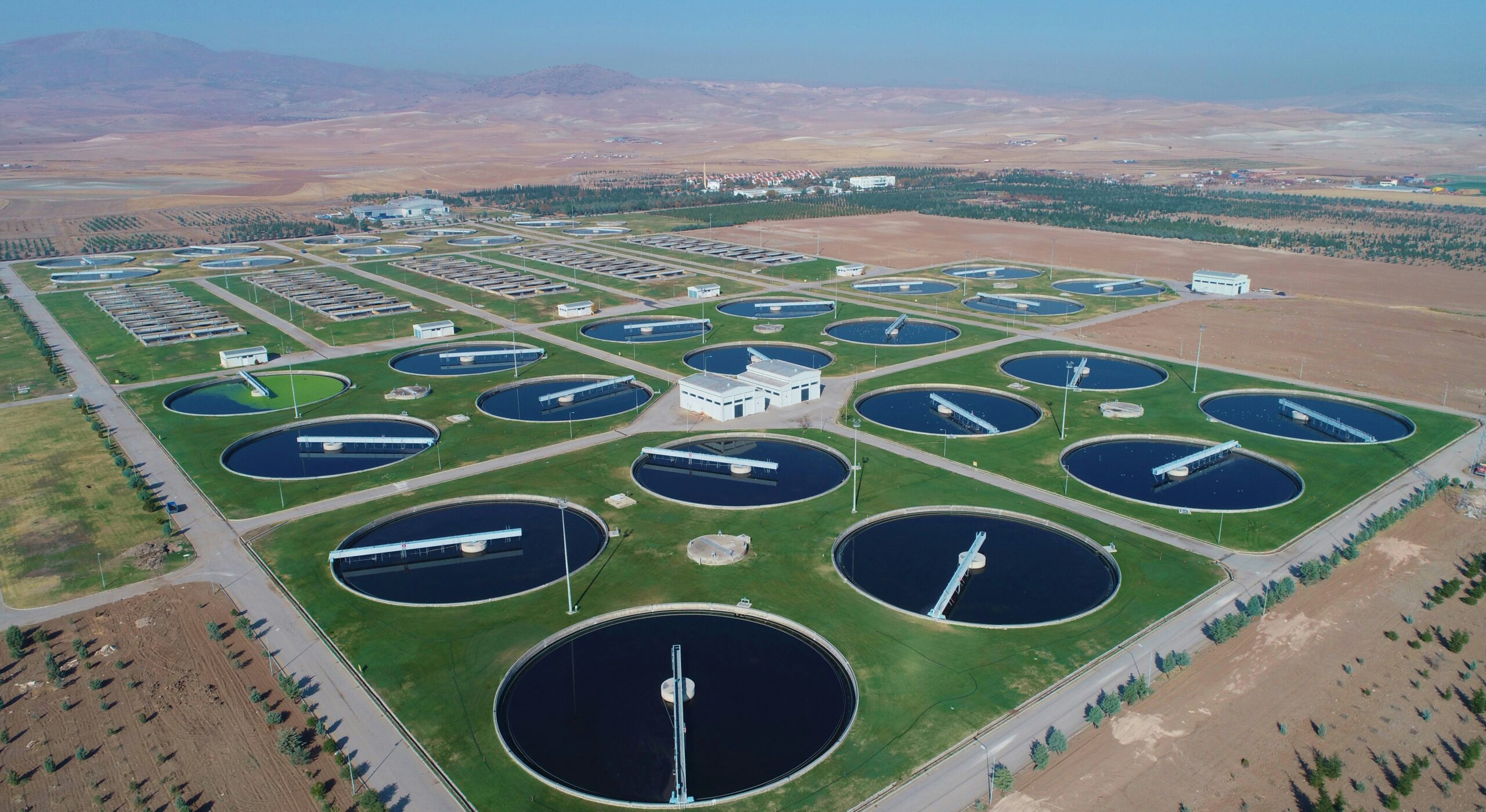
Water security is becoming a defining issue at the intersection of geopolitics, infrastructure, and cleantech. Nowhere is this more visible than in the Middle East, where water systems are both essential to daily life and increasingly exposed to strategic risk.
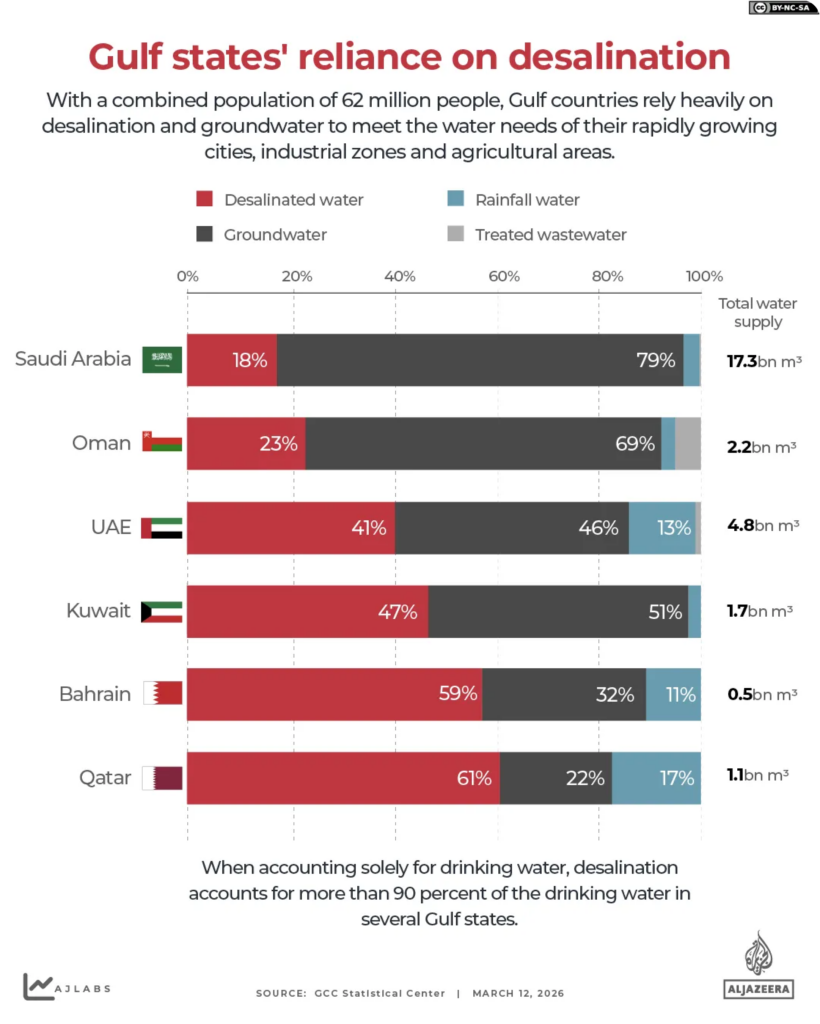
At the center of this dynamic is desalination. Countries such as Qatar, Kuwait, Bahrain, and Oman rely on desalination for between roughly 86% and 99% of their drinking water. Saudi Arabia depends on it for around 70%, while the UAE sources about 42%. More than 400 desalination plants line the Arabian Gulf, supplying one of the most water-scarce regions in the world.
This model has enabled large-scale urbanization in arid environments but has also created structural vulnerability. Water production is concentrated in a relatively small number of large coastal plants, meaning that disruption at a handful of facilities could impact entire populations. In geopolitically sensitive regions, that concentration turns water infrastructure into a strategic asset and a potential target.
Source: GCC Statistical Center, Al Jazeera
Optimizing the Backbone
In the near term, desalination remains indispensable. There is no alternative that can replace its scale. As a result, much of the innovation in the region is focused on improving the performance, cost, and sustainability of existing systems.
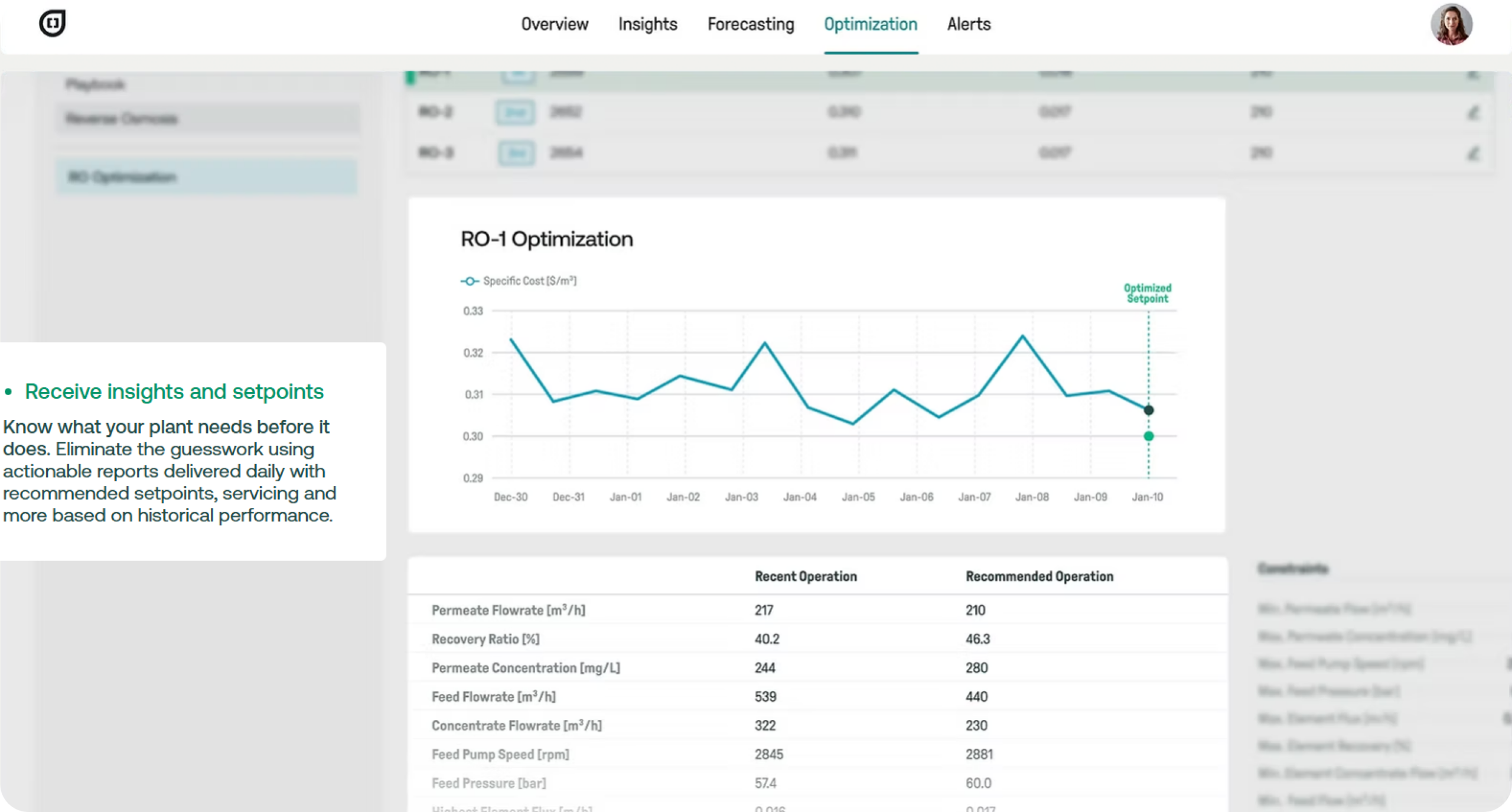
- Companies such as Pani are deploying AI-driven optimization software at desalination facilities, including the South Jeddah Corniche plant in Saudi Arabia. Through partnerships with groups like Abunayyan Holding, Pani is expanding across the Middle East and North Africa, helping operators reduce water usage ratios, improve uptime, and lower chemical and membrane costs. Even well-run facilities have seen measurable gains, including water savings of up to 5%.
- Industrial water specialist Gradiant is expanding its regional footprint through the acquisition of Advanced Watertek in Dubai. This positions the company to deploy integrated desalination, industrial treatment, and water reuse solutions across the Middle East. The move highlights growing demand for end-to-end water management rather than standalone desalination assets.
- Decarbonizing desalination has been a priority. Desolenator’s pilot with the Dubai Electricity and Water Authority at the Jebel Ali complex demonstrated a solar-powered approach to desalination that reduces reliance on fossil energy. This is particularly relevant in a region where water and energy systems are deeply interconnected.
Pani’s RO Optimization Dashboard
Regional innovators are also shaping the landscape.
- UAE-based Manhatv is developing lower-energy water production systems that rely more on natural processes, targeting the high energy intensity and environmental impacts of conventional desalination.
- Companies like Septech are expanding reverse osmosis and water recycling solutions for municipal and industrial users, reinforcing the role of reuse as part of the broader water mix.
- Meanwhile, ACWA Power continues to push scale, with projects such as the Taweelah plant in Abu Dhabi demonstrating how large desalination infrastructure is still central to regional water strategies.
However, optimizing desalination does not address its core structural limitation, and the system remains highly centralized.
What Diversification Looks Like
This is driving a parallel shift toward diversification. Rather than replacing desalination, the focus is on reducing dependence on any single source.
Wastewater reuse is one of the most immediate levers. It reduces overall demand for desalinated water while creating a more circular system. Demand management is also gaining attention, particularly in industrial sectors where water intensity is high.
There is also growing interest in distributed infrastructure. Smaller, modular desalination plants powered by renewable energy can reduce reliance on a few large facilities while maintaining supply. These systems may not match the scale of mega-plants, but they improve redundancy.
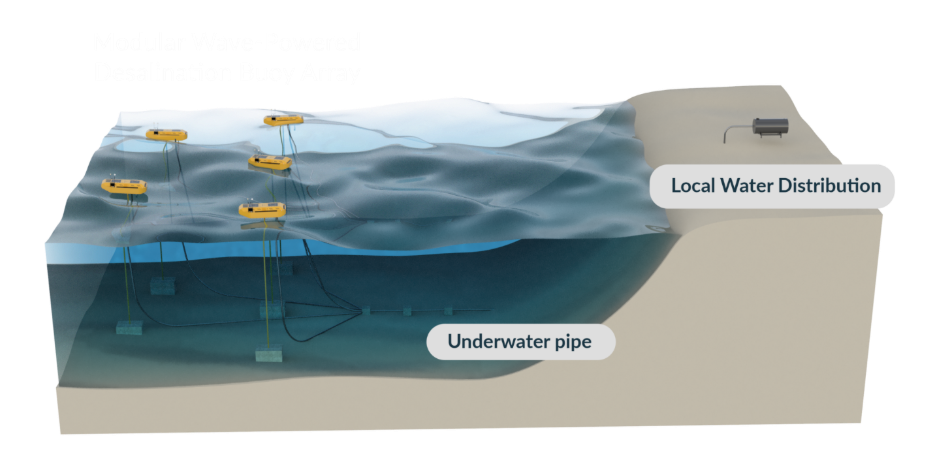
Emerging technologies are extending this trend. Oneka Technologies is developing wave-powered desalination systems that can operate off-grid and closer to the point of use. This reduces both energy requirements and infrastructure concentration.
Oneka Technologies Wave-Powered Desalination
Atmospheric water generation is also attracting attention as a complementary solution. By extracting water directly from humidity, these systems provide a decentralized supply that is not tied to coastal infrastructure. While unlikely to replace desalination, they offer resilience in specific use cases, particularly for remote or critical applications.
Taken together, these approaches point toward a more distributed water architecture. Instead of relying on a few large facilities, future systems may consist of multiple smaller, interconnected sources, including desalination, reuse, and alternative water production technologies.
Transition from efficiency-driven system design to resilience-driven design
For the longest time, the priority for water tech has primarily been maximizing output at the lowest cost. Now, the focus is expanding to include redundancy, flexibility, and risk exposure.
This shift is not purely technological. It also requires changes in governance and regional coordination. Initiatives such as the GCC Unified Water Strategy point toward more integrated planning, though implementation remains uneven. Shared infrastructure, strategic reserves, and coordinated response mechanisms will likely become more important as risks evolve.
Beyond just a resource challenge, the role of water in the Middle East has shifted to the center of the cleantech-defense nexus, where infrastructure design, technology innovation, and geopolitical risk increasingly intersect.
Transform Research and Data into Actionable Insights for Your Strategy
Leverage intuitive functionality to stay ahead of trends, make informed decisions, and move faster than the competition.


Gain Access
Extensive and vetted data allows you to identify trends and benchmarks quickly—so you can act on insights before your competitors do.

Deep, Thought-Provoking Analysis
Go beyond the numbers to understand the market trends and dynamics driving the cleantech transition. Real context, not just charts.
.

Curated Intelligence
Customize your insights based on what’s important to you. State-of-the-art visualization tools, personalized alerts, and tailored dashboards built around your priorities.