What is the Cold Chain?
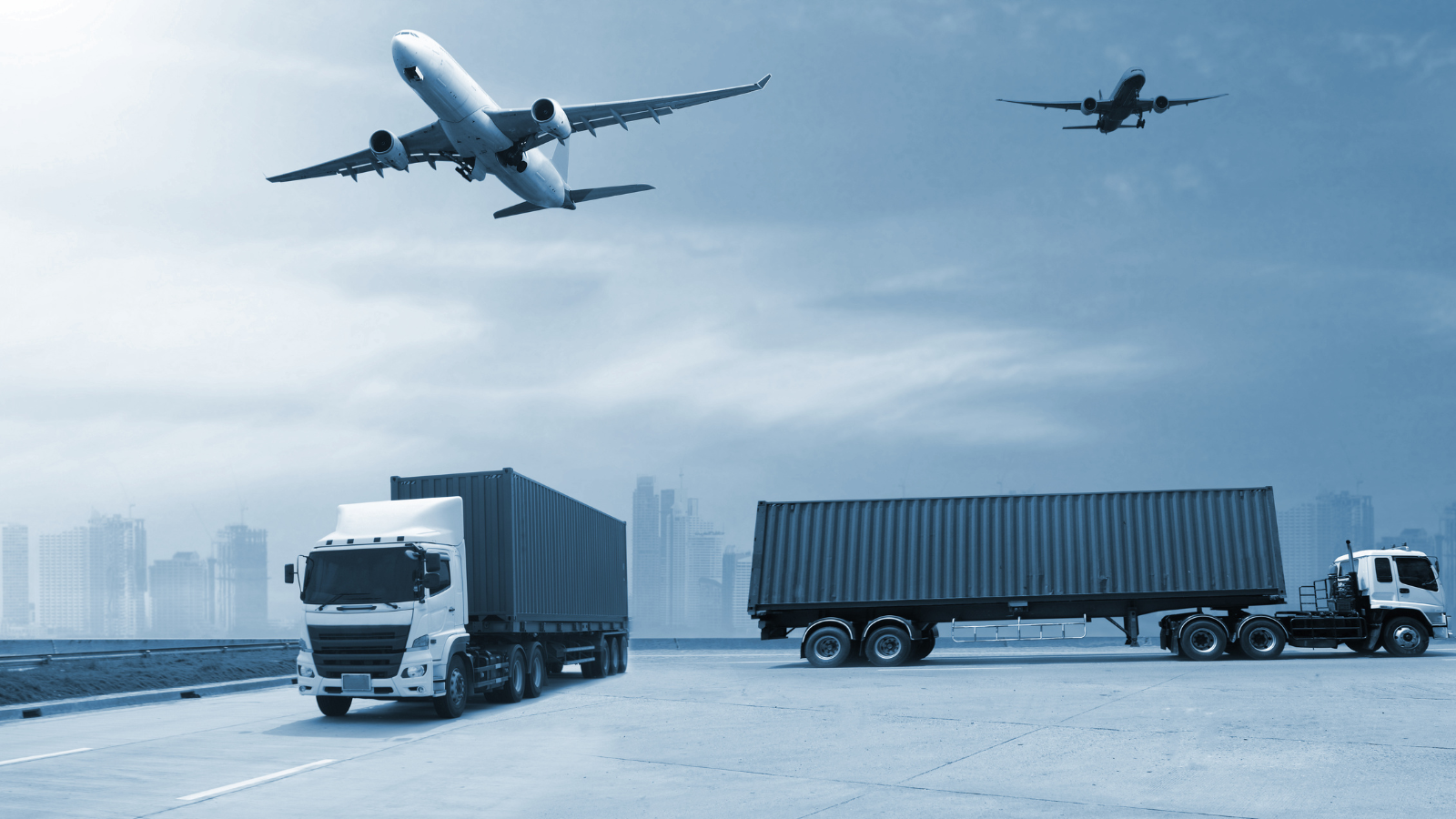
The cold chain is the global transportation and distribution of temperature-controlled products. It is an essential element of the global food production and distribution system, enabling the transport of fresh products such as dairy, meat, and produce, across the world.
The cold chain protects food safety and quality while also playing a critical role in the reduction of food waste and meeting the growing food demand. Recent estimates suggest that 14-20% of global food is lost between harvest and market, mostly due to cold chain issues, and up to 25% of vaccines are lost. Some projections forecast that implementing advanced cold chain solutions could feed 950 million people per year globally.
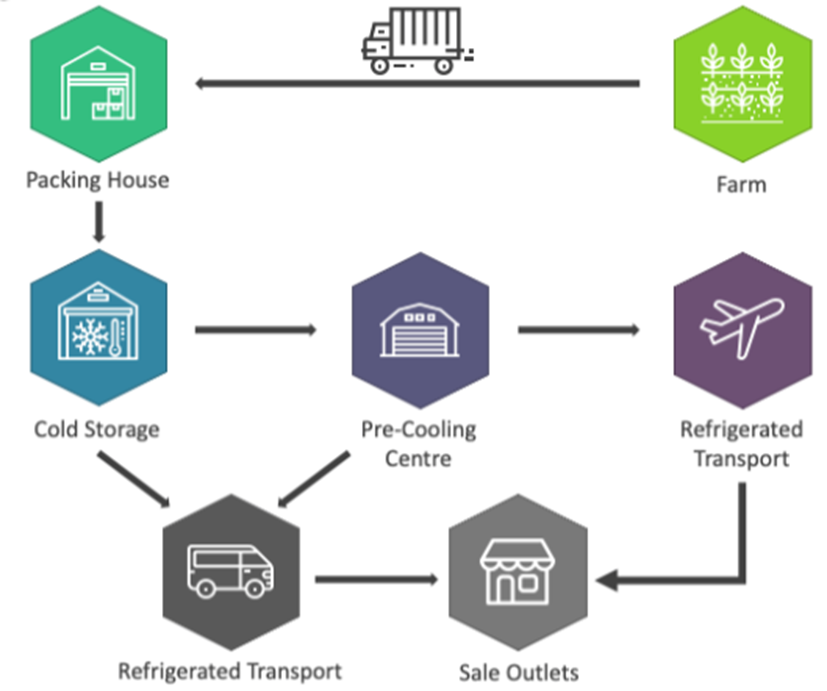
Cold Chain Logistics Diagram
Source: Collidu
The Challenge
Maintaining a constant temperature across the complex and fragmented food distribution and transportation system from farm to retail is a significant challenge. Failure to maintain specific temperatures and conditions result in spoiled and wasted food, high value products such as pharmaceuticals and vaccines, and wasted energy consumption.
- Global food distribution is logistically complex, spanning a wide range of actors, geographies, and climates
- In terms of energy demand, temperature control is costly and energy-intensive, particularly refrigeration of transport vehicles and maintenance of constant temperatures over time and over changing conditions
- Emissions are significant from energy demand of cooling and highly polluting refrigerants
Innovation and Solutions
Innovators and actors across global food chains are developing and implementing solutions in three key areas to reduce cold chain energy use and emissions while reducing food waste.
Digital solutions for visibility and monitoring: AI, IoT, and predictive analytics:
- IT enabled sensors for real-time product monitoring and tracking (e.g., Coolrun)
- AI for predictive maintenance of equipment, route optimization, and consumption and demand patterns (e.g., TrueCold, Paxafe,)
- Blockchain to establish supply chain traceability and chain of custody for high-profile goods such as vaccines (e.g., Cryox AI) (Read Supply Chain Traceability and Why Everyone Should Care for more insight on supply chain traceability)
Advanced packing and labeling:
- Passive cooling (phase change materials, advanced insulation, magnetic cooling) to reduce the need for active refrigeration, reducing energy use and protecting products from temperature changes (e.g., Cold Chain Technologies, Temperpack, Tessol)
- Nanotechnology for smart labels that alert to temperature changes and potential product damage (e.g., Identiv)
Vehicles and electrification:
The electrification of the fleets transporting products across the cold chain is essential to overall cold chain decarbonization. The main challenge for the electrification of cold chain fleets is the high energy demand of conventional cooling systems, which places high demand on the vehicle battery and reduces the EV´s range.
- Passive cooling solutions as previously mentioned reduce the energy demand on the battery system (e.g., MOBIQU)
- Battery and thermal management enabled by AI and battery analytics optimize vehicle energy use for propulsion, cooling, and charging to increase range and performance (e.g., Diabatix)
- Integration of PV to power refrigeration reduces demand on a vehicle battery, while off-grid refrigeration units prevent food waste in rural areas (e.g., Mobius Energy, Solar Freeze, AkoFresh)
- Innovators who specifically address the high energy demands of refrigeration of EVs include Sunswap, Yotuh
National Spotlights
Development of robust cold chains is emerging as a priority both for global transport and produce actors as well as local, regional, and international public sector organizations. The convergence of increasing urbanization, electrification, dwindling agricultural output due to climate change, and decarbonization targets highlight the cold chain as a site of inefficiency with high potential.
Countries leading in cold chain innovation demonstrate a combination of government-led initiatives and targets, and robust innovation ecosystems:
- India: 2019 India Cooling Action Plan (ICAP), National Center for Cold Chain Development, and subsidies to support cold chain development
- Saudi Arabia: Significant investment in digital and logistics infrastructure to improve food security and agricultural sectors as part of the Vision 2030 targets
- Rwanda: Initiatives such as National Cooling Strategy and hosting of Africa Centre of Excellence for Sustainable Cooling and Cold Chain
- France: Projects like OPTICOLD and initiatives and regulations to promote circularity and reduce food waste
- Japan: Japanese standards have been adopted by the International Organization for Standardization (ISO) around temperature recording and real-time measurement during transport. The Act on Promotion of Food Loss and Waste Reduction sets a 50% target to reduce food waste by 2050