
As a famous rapper once said, “Ça commence à chauffer ici.” Roughly translated from French to “It’s getting hot in here.” Unfortunately, taking off all our clothes is not always an option. Case in point: Paris Fashion Week Men’s ran June 23–28 this year, smack in the middle of a heatwave that would go on to cause more than 10,000 excess deaths across Europe, over 5,700 of them in France alone. On June 25, the peak of the heat, Rick Owens sent models down the runway in inflatable Tyvek tracksuits rigged with tiny fans, an “aircon for the body” built with Adidas. People outside the show that same day were photographed sheltering under umbrellas just to survive the walk in. Weeks later, Uniqlo’s parent company Fast Retailing told investors that same heatwave had forced store closures and kept shoppers home across Europe.
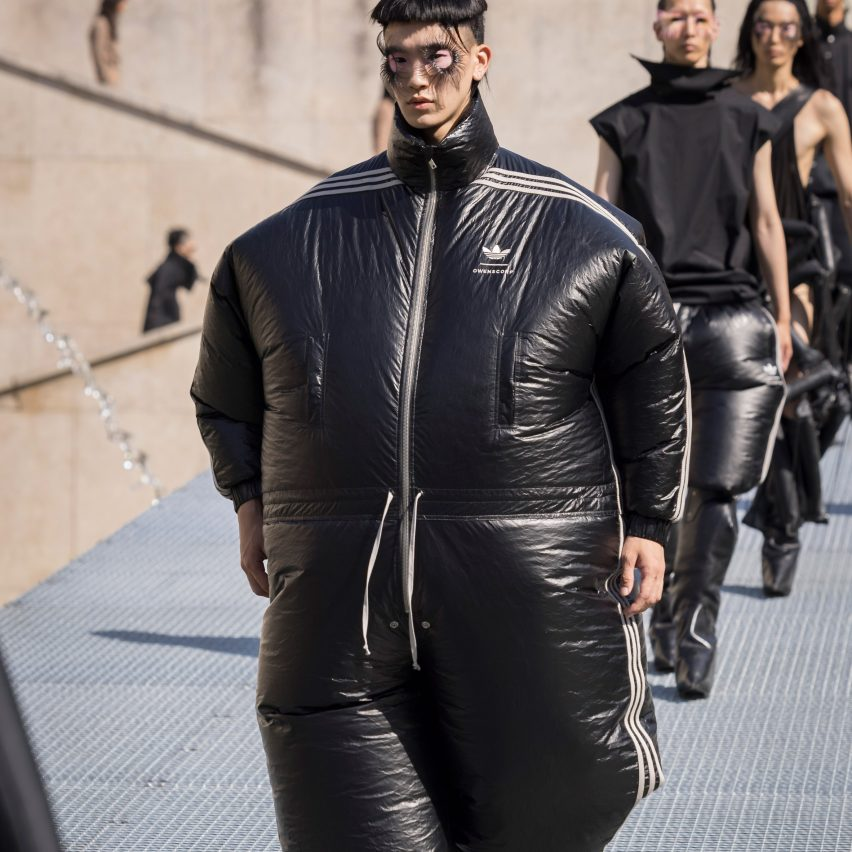
Rick Owens x Adidas ClimaCool SS27 collection inflatable tracksuits
Often times, apparel is treated as commodity because the finished product looks unremarkable; a t-shirt is a t-shirt. But innovations from material science in garments have gotten sophisticated to help tackle the climbing temperatures, and the market has not caught up to what the underlying problem is worth. The International Labour Organization (ILO) projects that heat stress will cost the global economy $2.4T/year by 2030, equivalent to wiping out 80 million full-time jobs worldwide. Put that next to the global apparel and textile industry itself, valued at roughly $1.9T in 2026. Climate change is on track to cost the world more in lost labor than the entire fashion industry is worth.
Even more pressing, the workforce sewing these garments largely works in the same heat-stressed places the garments are meant to solve for. Bangladesh alone lost an estimated 29 billion labor hours to heat exposure in 2024, a 92% jump from the 1990s average, costing roughly 5% of the country’s GDP. Across the major garment-producing hubs, one widely cited estimate puts $65B in apparel export earnings and a million jobs at risk by 2030 if factories and supply chains do not adapt. The burden of adapting often falls on workers directly. One Bangladeshi factory owner described raising his own operating costs by 2% to 5% to add fans, ventilation, and hydration stations, while workers absorb a real chunk of the cost of coping themselves, described by one labor advocate as an invisible “heat tax.” The industry is racing to sell comfort to people who can afford it, built substantially by people who cannot yet afford it themselves.
Fashion is far from the only industry where workers are feeling the heat stress. Heat-related hospitalizations and deaths have been documented by the Occupational Safety and Health Administration (OSHA) across roughly 275 industries in the U.S., including postal workers, railroad inspectors, and the military. Agriculture carries some of the heaviest global exposure of all: the ILO projects that the sector, employing 940 million people worldwide, will account for 60% of all working hours lost to heat stress by 2030. Even with the rise of automation, physical AI, and robotics, there are jobs that still require human hands and minds to be physically present. And most of these industries are not built alike, even geographically. Where one farm in the U.S. can mobilize a fleet of tractors, the same job in Asia is still done by hand, or in remote regions where physically hauling, storing, and maintaining large pieces of equipment does not make sense.
The Full Picture Is Members-Only
Members get the complete analysis. Unlock the full picture—the insights, data, and connections that will guide your next move.