
SAN FRANCISCO, CA — March 16, 2026 — Cleantech Group today released a new market intelligence report, Sustainable Dyes & Pigments, examining the technological and market pathways for reducing the environmental footprint of colorants across textiles, coatings, packaging, cosmetics, and consumer goods. The report highlights that while a wave of biological and process innovations is emerging, widespread adoption will depend on cost competitiveness, supply chain compatibility, and regulatory pressure.
The report finds that petrochemical- and mineral-based colorants remain dominant due to their performance, scale, and cost advantages. Sustainable alternatives are gaining attention, but must meet strict performance parity requirements and overcome deeply entrenched manufacturing infrastructure before they can capture significant market share.
“Colorants are part of a mature industrial chemicals ecosystem optimized for cost, performance, and process compatibility”, says Diana Rasner, Group Lead at Cleantech Group. “Sustainable alternatives will only scale if they can meet those same requirements while offering measurable environmental benefits.”
The analysis also highlights that sustainability adoption is increasingly being driven by compliance pressures rather than voluntary corporate commitments. Regulations restricting hazardous dye chemistries and tightening environmental disclosure requirements are beginning to force reformulation across multiple industries.
Core Findings
According to the report:
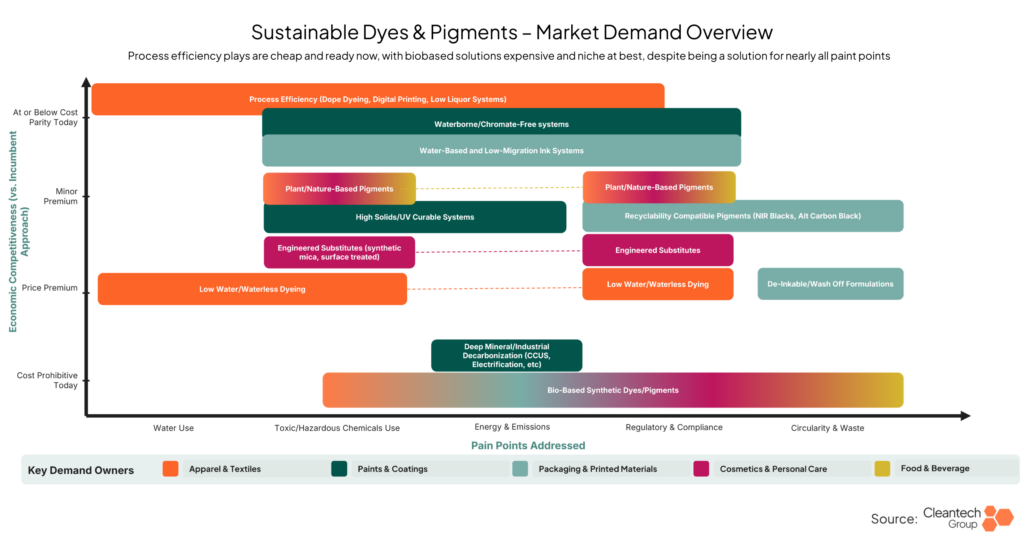
- Performance and price parity remain the primary adoption thresholds: Sustainable dyes and pigments must match incumbent products on color performance, durability, and manufacturing compatibility while approaching the ultra-low cost of petrochemical alternatives. High-volume sectors such as textiles and packaging operate on thin margins, leaving little room for sustained green premiums
- Resource-efficiency upgrades may drive the earliest environmental gains: Improvements in wastewater management, water recovery, and production efficiency can significantly reduce the environmental footprint of dyeing and coloration systems without requiring changes to the dyes themselves. These solutions are often easier for manufacturers to adopt because they avoid the qualification, certification, and performance risks associated with new color chemistries.
- Regulation Is Emerging as a Key Market Catalyst: Chemical regulations and bans on hazardous substances are pushing brands and manufacturers to identify safer alternatives, accelerating innovation in low-toxicity and bio-based colorants.
The report concludes that the transition to sustainable dyes and pigments will likely occur through a combination of incremental improvements and targeted breakthroughs rather than a single disruptive solution. Technologies that integrate seamlessly with existing supply chains, reduce environmental impacts at key production stages, and deliver verifiable cost and performance parity are most likely to succeed.
About Cleantech Group
Cleantech® Group is the human intelligence authority on global cleantech innovation. Since 2002, we’ve helped decision-makers across industry, finance, and policy navigate the rapid shifts transforming the global economy.
Going beyond market intelligence—offering insights, strategic guidance, and curated connections to help leaders stay ahead, identify opportunities, and act with confidence. Our insight is built on over 20 years of human intelligence, proprietary data, and direct relationships with the ecosystem leaders driving change.
Media Contact
Addison Marr
Senior Marketing Manager
Cleantech Group
addison.marr@cleantech.com