
The World Is Moving on, While Packaging Is Stuck on Perfect
Sustainable biobased packaging solutions are on the market, yet with an endless sea of eco-friendly products, it can be tough to know where to start. To add to the headache, the market is still finding its footing. Depending on the material, you’ll run into performance issues, end-of-life disposal challenges, cost-prohibitive premiums, or long lead times as small-scale production catches trails behind growing demand. Perhaps, the biggest hurdle is the ongoing beauty pageant.
The pursuit of perfection of sustainable alternatives that mirror the exact performance and look of the incumbent packaging products, like plastics and even paper, is stalling progress. It’s as though sustainable products are held to a higher standard than the ones they are meant to replace. Brands frequently reject innovative solutions due to tints or natural textures, prioritizing shelf-appeal over environmental impact. The industry is waiting for a silver bullet material that mimics the look of incumbent products, is infinitely recyclable, cost-parity, and carbon-negative—bonus if it performs magic and walks on water.
Some companies are betting on their innovation by manufacturing their own finished products for B2B sales to have products ready-to-go for distributors, locking in customers for years at a time. And they’re doing it relatively inexpensively. Of course, costs vary regionally and are subject to numerous variables like biomass and energy availability. But this approach also allows innovators to have greater operational and financial control over their business.
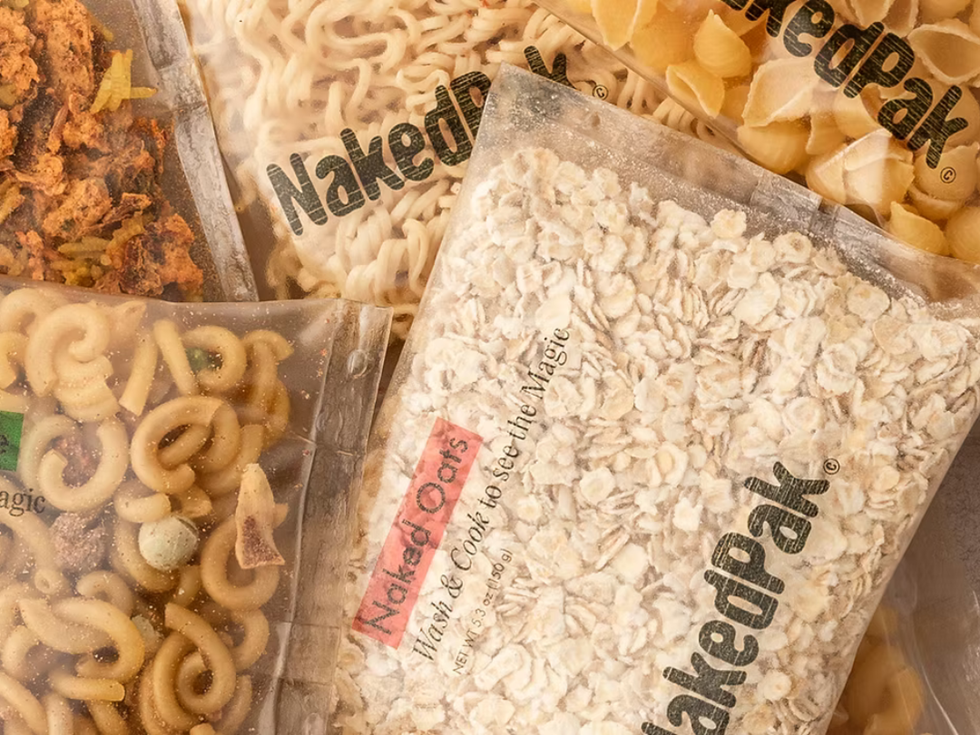
NakedPak is leveraging manufacturing partners to scale its edible polymer packaging without building a CAPEPX-heavy facility. And it’s using a B2C model approach to begin sales in North America without waiting for corporate channel partners. NakedPak is targeting applications without waste infrastructure like for outdoor enthusiasts.
Source: NakedPak’s edible packaging boils in hot water, leaving no cleanup
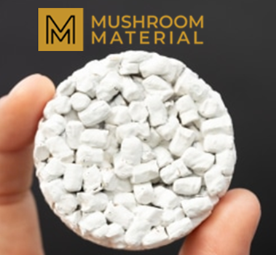
Mushroom Material’s mycelium-based packaging is entering the market through B2B sales in electronics but anticipates greater profitability in the food industry like cold chain. It’s a prime example of prioritizing market-led product-fit over forcing a solution where it doesn’t belong yet.
Source: Mushroom Material’s pelletized mycelium-based packaging.
Be Careful with These Traps
Solutions are ready but anticipate challenges for those that claim drop-in ready with existing manufacturing lines. In application, many solutions require modifications to production lines that can be somewhat CAPEX-heavy and result in slowdowns in production. Most manufacturers don’t have the room to introduce modifications, especially for high-risk materials without established markets. In a high-volume industry, even a few percentage-point loss in efficiency can make a sustainable material feel unviable compared to plastics
Lengthy and expensive food certification and validation processes are another barrier to scale. Even small changes in material formulation could mean an all-new patent filing process and food certification requirements. To avoid this, some are offering licensing and material formulation services for incumbents. While this “asset-light” model reduces upfront risk, ultimately it ties growth to the pace of partner-driven projects rather than the high-volume output necessary to make low-cost commodities profitable.
We Need Innovation Beyond Just Materials
Corporates are interested and we’ve seen great evidence of early special projects that represent positive momentum.
- PepsiCo and Diageo have open innovator challenges targeting packaging with a few pilots globally.
- Brazil-based growPack has seen product-fit with its corn-husk derived fiber packaging with partners, Colgate PalmOlive and Ambev.
- US-based Hera Materials captured the attention of food giants, McCormick and Coca-Cola, due to its WoodPak material that is produced from recycled paper.
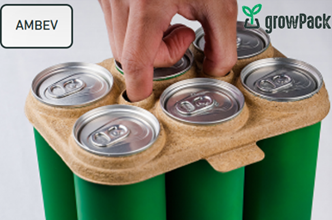
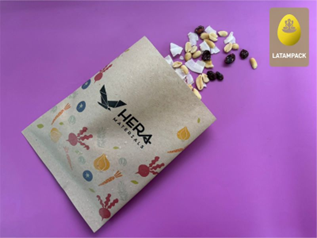
Source: growPack’s biorings, Hera’s WoodPak material
The right folks are engaging but aren’t moving fast enough. Waiting for incumbents to adopt can be a grueling patience game—sales cycles are notoriously long—up to five years in many cases. And for good reasons.
While many corporates maintain dedicated innovation units, these teams are slammed by insufficient funding, limited resources, and a lack of cross-departmental alignment. The structural complexity of large corporations often results in decision paralysis, where decision-making is perpetually deferred to senior leadership. Furthermore, a communication gap persists between the language technical teams prefer—those focused on the science details—and broader departments focused on big picture.
To bridge this gap, organizations must establish dedicated innovation and scaling functions equipped with frameworks that go beyond mere innovation identification and catalytic funding. For start-ups to truly succeed within these ecosystems, they require comprehensive mentorship and strategic guidance to navigate the nuances of their specific markets. Much like a newborn, these start-ups need significant nurturing to navigate the packaging markets.
Unlock the full analysis with a membership:
15-year innovation trajectory
Market-winning, niche, and business-as-usual scenarios with technology, policy, and market indicators
Investor & corporate profiles
Funding strategies, stage focus, and portfolio breakdowns for active players like Regeneration.VC
Full innovator scorecards
Scored on cleantech innovation, impact, scalability, and cost across 10+ emerging companies
End-of-life value chain maps
Bioplastics, fiber, mycelium, and natural polymers from feedstock to composting pathways
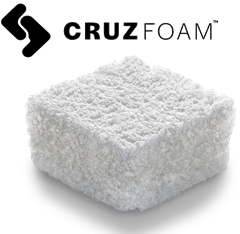
Regeneration.VC is setting a new standard with several prominent start-ups in its portfolio including Cruz Foam, NotPLA, and Flexi-hex. Regeneration.VC’s fund specializes in consumer-related products, beginning at the feedstock. Their unique focus offers more than catalytic capital by providing founders with the expert mentorship and technical roadmaps—a real blueprint to achieving commercial scalability. The fund fills a vital gap within the ecosystem that corporates and ESOs can mimic. There is an urgent, unmet demand for this level of specialized guidance across the broader packaging market.
Source: Cruz Foam’s biofoam derived from chitosan intended to replace polystyrene
Regulation without Infrastructure Is Just a Bottleneck
While incumbents are relying on the slow maturation of recycling infrastructure to justify continued plastic production, bioplastics—though similar to plastics and growing in capacity—remain hindered by high costs and recent high-profile failures. Meanwhile, regulatory mandates are in motion with some even banning bioplastics.
In Asia, anti-plastics laws have boosted bioplastics, pushing the region to becoming the top producer and exporter globally. But experts warn that the rise of bioplastics has only worsened landfill burden due to a lack of downstream infrastructure, e.g., industrial composting or recycling.
In the EU, the Packaging and Packaging Waste Regulation (PPWR) was adopted to mandate the uptake of recyclable or reusable materials beginning August 2026. It’s a critical shift by setting precedent that sustainability goals are no longer voluntary. Rather, it’s a baseline requirement for doing business. The mandate is set, but recycling only works when the recycled material is cost-competitive with virgin materials. Policy will need to enforce reduction of virgin materials through aggressive taxes and penalties, otherwise these measures will not impact the way they’re designed to.
Innovator Spotlight
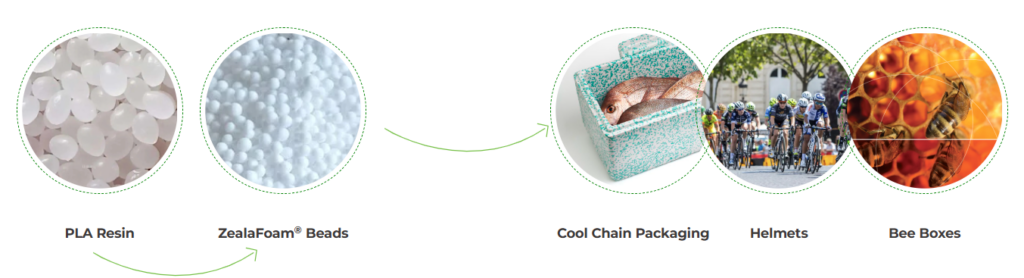

I’m excited about New Zealand-based Zealafoam’s CO2-expanded-PLA to replace polystyrene (Styrofoam), a well-known packaging material with virtually zero mature alternatives. Zealafoam is leveraging PLA’s growing global supply chain along with polystyrene’s production methodologies, meaning no CAPEX-heavy machinery. The company purchases PLA from a producer and plugs it into existing polystyrene production lines with only minimal modifications. The caveat? It’s not perfect.
PLA is not compatible with polystyrene recycling, is only industrially compostable, and cannot compete in cost. But PLA’s carbon footprint is up to 80% lower than polystyrene. Their strategy centers on decarbonizing existing value chains rather than reimagining them. By utilizing current assets for gradual decarbonization, the company offers a pragmatic path to net-zero that balances upfront premiums against environmental gains.
Reality Check
None of this matters without a level playing field. Lax regulatory pressures and somewhat changing consumer sentiment aren’t enough to force the hand of relevant players. The struggle is that everyone wants a radical step-change in the products they use, or they’re not likely to adopt. The industry is obsessed with perfection, aiming for products that perform miracles over products with incremental sustainability gains.
We continue packaging our lunch in containers built to last hundreds, even thousands of years. If the food is typically going to expire in a week or two at most, then why does the packaging need to outlast our grandchildren’s grandchildren?